Posted

Horse owners across New South Wales will have a special opportunity this October to take part in a series of hands-on horsemanship clinics with Amanda Wilson, with sessions being held in both Sydney and Armidale.

The two-day clinics will focus on practical horsemanship, behavioural training and developing a deeper understanding of how horses think, communicate and respond to pressure.

Rather than simply trying to stop behaviours such as anxiety, impatience, pushiness, reactivity or fear, Amanda’s approach looks beyond the behaviour itself to understand what is happening underneath it.

Participants will learn how to recognise the signals their horse is giving them, better understand equine body language, and adjust their own timing and communication to help their horse become calmer, more confident and more responsive.

Understanding the Horse Behind the Behaviour

A major focus of the clinics will be learning how horses process pressure and communicate with their handlers.

By understanding where a particular response is coming from, handlers can develop more effective ways of working through behavioural challenges while building greater confidence and trust between horse and handler.

The clinics are suitable for anyone dealing with a particular behavioural issue, as well as horse owners who simply want to improve their everyday horsemanship and develop a stronger partnership with their horse.

The ultimate goal is simple: to help handlers better understand how their horse thinks, while helping the horse more clearly understand what is being asked of them.


📍 Sydney Clinic

3–4 October 2026


For bookings and further information, contact Sam:
sam@horseshop.com.au

📍 Armidale Clinics


5–6 October 2026
7–8 October 2026


For bookings and further information, contact Lucy:
newenglandbrumbies@gmail.com


Horse-and-handler places and spectator positions are available.

Spaces are limited, so anyone interested in attending is encouraged to get in touch early to secure a place.

Whether you are working through a behavioural challenge or simply want to better understand your horse, these clinics offer a valuable opportunity to develop practical skills, improve communication and build a stronger partnership.

Author

Posted

Yuraygir’s Brumbies: A Court Fight With Much More at Stake Than Horses


A small population of Brumbies roaming one of northern New South Wales’ most remarkable coastal national parks has become the focus of a legal battle — but the consequences could extend far beyond the fate of the horses themselves.


Yuraygir National Park stretches along the NSW north coast through Yaegl and Gumbaynggirr Country, protecting an extraordinary mosaic of beaches, lagoons, freshwater wetlands, saltmarshes and coastal heath.


It is a landscape where coastal emus still roam and migrating whales can be watched from the shoreline.


But Yuraygir is also home to a small population of Brumbies, and disagreement over how those animals should be managed has now reached the NSW Land and Environment Court.

A fight over what “removal” actually means


Brumby advocate Carmen Jackson launched urgent legal proceedings in August in an attempt to stop the National Parks and Wildlife Service from killing Brumbies in Yuraygir.


NPWS had planned operations involving aerial shooting, ground shooting and trapping as part of a wider program targeting introduced animals including pigs, deer and foxes, as well as Brumbies.


Those operations were suspended while the legal challenge proceeded.


At the centre of the case is a deceptively simple question: does the authority to “remove” or “eradicate” Brumbies from a national park include the authority to kill them?


During the final hearing on September 9, Jackson argued that the relevant management documents did not specifically authorise shooting and that removal should not automatically be interpreted as killing.


The NSW government disagreed, arguing the National Parks and Wildlife Act and Biosecurity Act provide sufficiently broad authority for NPWS to control animals within national parks, including through lethal methods.


Justice Rachel Pepper has reserved her decision, with a ruling expected before October 30.

Why Brumbies provoke such a powerful response


Managing Brumbies has always been very different from controlling animals such as pigs or foxes.


Brumbies occupy a powerful place in Australian folklore, history, literature and popular culture, and many Australians regard them as living representatives of the nation’s pastoral and pioneering heritage.


That cultural connection helps explain why lethal control — particularly aerial shooting — generates such fierce opposition.


Animal welfare is also a major concern.


Critics of aerial shooting fear horses may experience extreme stress while being pursued, or may be wounded rather than killed immediately.


Those concerns are at the heart of much of the public opposition to lethal Brumby control.


The ecological argument put forward by supporters of removal is that Brumbies are large grazing animals whose presence can affect sensitive environments, particularly wetlands and soft soils.


However, the debate is far more complicated than simply labelling the animals as pests.


Brumbies have existed in Australian landscapes for generations and have become deeply embedded in the nation’s cultural identity.


For many Australians, they are not insignificant animals to be dismissed with a label. They are Brumbies.

Fragile wetlands and competing concerns


Yuraygir contains extensive wetlands, lagoons, saltmarshes and wet heath.


These are beautiful environments, but they are also vulnerable ones.


Conservationists argue that repeated movement by large animals through waterlogged soils can compact or disturb the ground, damage vegetation and affect shallow pools and stream banks.


They say this may have consequences for native species that depend on those habitats.


Yuraygir supports an impressive collection of threatened wildlife.


Among them are the endangered green and golden bell frog, the wallum froglet and the Olongburra frog.


These species depend on wetland environments for shelter, breeding and survival.


Threatened shorebirds including little terns, pied oystercatchers and the critically endangered beach stone-curlew also nest on or close to the ground.


Their nests can be little more than shallow depressions in sand or soil, making eggs and chicks vulnerable to many forms of disturbance.


Dense vegetation used by species such as the eastern ground parrot is also an important component of the park’s ecology.


Yuraygir’s management planning has identified Brumbies as one of several pressures on these habitats, alongside other introduced animals, weeds, human disturbance, fire and broader environmental change.

The dispute affects more than Brumbies


There is another complication.


The suspension of pest-control operations has not affected Brumbies alone.


Work targeting pigs, deer and foxes has also been disrupted.


Those species bring their own ecological pressures.


Pigs and deer can damage vegetation and wetlands, while foxes prey directly on native wildlife.


Fox control is particularly important for ground-dwelling and ground-nesting species, including little terns, beach stone-curlews and coastal emu chicks.


That means a court case focused principally on the treatment of a relatively small number of Brumbies also intersects with much wider questions about how Yuraygir National Park is managed.

Why a small Brumby population has become such a major issue


Supporters of lethal Brumby control argue that a small population is easier to manage before numbers increase.


Their concern is that allowing the population to grow could make future management more difficult and expensive.


Brumby advocates, however, question whether killing animals is justified simply because a population may increase in the future.


The relatively small number of Brumbies in Yuraygir raises an obvious question:


Could non-lethal management approaches provide an alternative?


Options such as trapping, removal, rehoming, fertility control and carefully managed population monitoring are frequently raised in Brumby debates.


Whether such methods are practical, affordable or suitable for Yuraygir remains part of the wider dispute.


Kosciuszko National Park is often cited by supporters of lethal control as an example of what can happen when Brumby populations become large.


Thousands of Brumbies have been removed from Kosciuszko in recent years, including through aerial shooting.


But Yuraygir is not Kosciuszko.


The landscapes are different, the populations are different and the scale of the issue is different.


That makes the debate over Yuraygir particularly significant.


It raises the question of whether a small Brumby population should automatically be approached in the same way as a much larger population elsewhere.

Heritage, welfare and conservation


None of this makes the Brumby debate simple.


Brumbies are intelligent, social animals with a long and distinctive place in Australian history.


For generations they have featured in stories, poetry, films and the collective memory of rural Australia.


To many people, their significance extends well beyond the simple question of whether they originated from domestic horses.


At the same time, national parks exist to protect native landscapes, ecosystems and wildlife.


That creates a difficult and often emotionally charged debate over how different values should be balanced.


Can Brumbies be protected while native wildlife is also protected?

Can non-lethal management achieve acceptable outcomes?

Should small Brumby populations be managed differently from very large ones?

And how much weight should be given to the cultural and historical significance of Brumbies when management decisions are made?


These are questions that cannot be answered simply by attaching a dismissive label to the animals.


For now, the immediate legal question rests with the NSW Land and Environment Court.


Its decision will help determine what powers authorities can exercise in Yuraygir.


But the broader debate is unlikely to disappear.


The future of Yuraygir’s Brumbies sits at the intersection of conservation, animal welfare, heritage and law — and whatever happens next will be watched closely by people on every side of the debate.
Author

Posted

Below is a very good article by the Brumby Action Group (link in email below) including scientific facts and truthful perspectives. There is a brief summary identifying the flaws in the NSWGovt numberology methods identified by respected Biostatitician’s 2023 report, Clare Galea, and is available if anyone who would like a full copy of Clare Galea’s 2023 Submission No 62 to the “Inquiry into proposed Aerial Shooting of Brumbies in KNP” please email a request.

The persistent failures of the NSWGovernment to be transparent and reveal to the public accurate numbers of Brumbies, drove Mr Andrew Thaler (at his personal cost) to arrange with attendant experts a flyover of the KNP to count the Brumbies themselves with aerial photographs (which facility, although available to it, the NSW Govt persistently refuses to use). Mr Thaler’s aerial count estimates in July last 2026 there are less than 100 Brumbies left in KNP. So, at last, thanks to Mr Thaler, we have at least an estimated baseline number to work upon.

So the NSWLabor/NPWLS/ISCGreens repeatly stated 3,000 Brumbies to be the minimum number to be left in the KNP is an untruthful LIE.
There are not the minimum 3,000 Brumbies now left in KNP, and they know it and another cull is scheduled next November!.

Recent evidence of ISC’s stated intentions [have always been] that there will be Zero Brumbies remaining in KNP by 2027.

If we can get as many signatures to petitions as possible, it will be harder for NSWLabor/NPWLS/ISCGreens to ignore.

MEANTIME, the current “Aerial Culling of Brumbies” ePetition in Legislative Council (Upper House) is progressively growing – many thanks to all who are pushing the pedals to reach the highest goal of between 50,000 – 60,000. The tally @ 1pm today is 26,750 signatures – almost 27,000.

This e-petiton closes 4 September next – still have almost 3 weeks left …

to make our Brumby mark on the NSW Parliament Legislative Council (Upper House) after closing a further debate will follow!

With persistent pressure and mounting numbers of signatures to the Petitions, especially this current ePetition closing 4 Sep next, (which will then be debated in the Upper House), will hopefully bring us another step closer to stopping the next cull scheduled for next 1 Nov 2026.

So please keep up the pressure, spread the word to as many NSW RESIDENTS you know, don’t know, or pass on daily rounds, to google words …”Aerial Culling of Brumbies” ePetition in Legislative Council for signatures.

BIG THANKS TO ALL (on behalf of the remaining Brumbies left in KNP).

PS:

There is also our NSW Parliamentarian, the Hon. Emma Hurst MLC, Petition link below:

https://www.emmahurstmp.com/petition_stop_the_slaughter_of_brumbies

So please also sign and SHARE Emma’s petition.

Author

Posted

Save the Brumbies is appalled and deeply saddened by the senseless shooting deaths of two heritage Brumbies in Kosciuszko National Park, including Matagi, one of the region’s most recognised and beloved wild stallions.

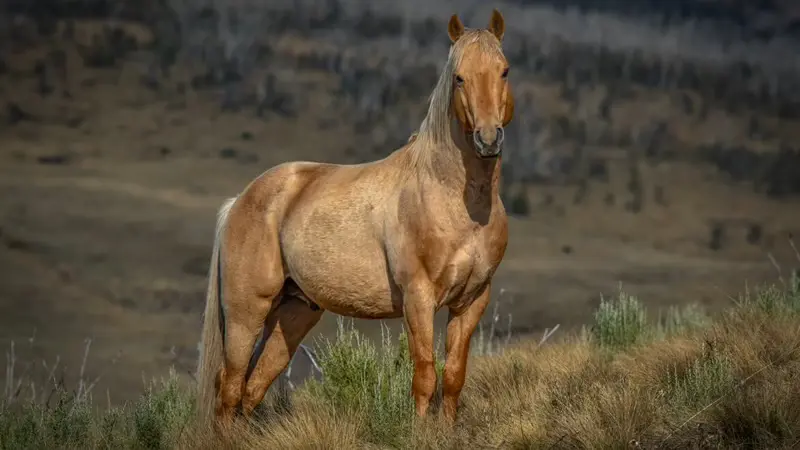
Matagi, a magnificent mature palomino who had roamed the Snowy Mountains for more than a decade, was found dead near Sawyers Hill in late June. Beside him lay a young black mare, believed to have been his daughter and not yet two years old.

Their deaths were cruel, unnecessary and entirely without purpose.

These were not nameless animals or disposable objects. They were living, sentient beings and part of Australia’s unique cultural heritage. Matagi was known and photographed by generations of visitors, photographers and Brumby advocates. He had become a familiar and much-loved presence in the high country and was believed to be the last mature palomino stallion remaining in Kosciuszko National Park.

Now he is gone.

NSW Police are continuing to investigate the shootings. Police have confirmed that bullets recovered during the investigation were not the same as those used in authorised National Parks and Wildlife Service aerial and ground-shooting operations.

The National Parks and Wildlife Service has also stated that the deaths were not part of an authorised control operation and that the animals were found outside the designated shooting area.

This distinction is important. However, it does nothing to lessen the horror of what happened, nor does it erase the grim environment that has been created around Brumbies in Kosciuszko National Park.

For years, these heritage animals have been publicly vilified, reduced to population figures and labelled as pests to be eradicated. When governments normalise the shooting of horses from helicopters and on the ground, it inevitably sends a disturbing message: that the lives of Brumbies are cheap and that killing them is an acceptable solution.

Whether a Brumby is shot legally under a government program or illegally by an unknown individual, the result for the animal is the same—a violent, terrifying and often prolonged death.

There is nothing humane about pursuing frightened horses from the air. There is nothing compassionate about shooting animals within their own family groups. There is nothing honourable about leaving carcasses scattered across the landscape while surviving horses are left traumatised, injured or separated from their companions.

The killing of Matagi and the young mare is especially disturbing because Brumby advocates understood that Matagi lived within a designated retention area.

These retention areas were supposedly established to preserve representative populations of Kosciuszko’s recognised heritage Brumbies, including horses associated with Kiandra, Currango, Long Plain, Cascade, Byadbo and Pilot.

The areas were selected because of their connections to the Snowy Mountains’ pastoral history, traditional Brumby-running practices and generations of local stories.

What value does the word “retention” have when an iconic stallion can be found shot dead?

What protection does heritage recognition actually provide when thousands of other Brumbies remain condemned to death under a government program?

Under the Kosciuszko National Park Wild Horse Heritage Management Plan, the NSW Government intends to reduce the Brumby population to 3,000 by 30 June 2027. Approved methods include trapping, rehoming, ground shooting and aerial shooting, with aerial shooting added to the program in 2023.

Save the Brumbies considers the continued use of lethal control, particularly aerial shooting, to be morally indefensible.

These animals are not targets. They are not statistics. They are not an inconvenience to be removed as cheaply and quickly as possible.

They are descendants of horses that helped build regional Australia. Their history is intertwined with exploration, farming, mining, transport, settlement and the development of the Snowy Mountains. Their presence is part of the living story of this country.

It is grotesque that an animal can be officially recognised for its heritage value while members of the same population are simultaneously chased and shot.

Brumby advocates have repeatedly called for greater use of trapping, responsible rehoming, sanctuary placement and fertility control. These methods require commitment, planning and resources, but they offer a pathway that does not depend upon mass killing.

Save the Brumbies and other rescue organisations have demonstrated that Brumbies can be successfully trapped, handled, rehabilitated and rehomed. With patience and proper care, they become intelligent, loyal and highly capable companions.

The repeated claim that slaughter is the only practical option must be rejected.

Convenience does not make cruelty acceptable.

Cost does not justify suffering.

Administrative population targets do not excuse the destruction of living animals that governments themselves have recognised as possessing cultural and heritage significance.

The deaths of Matagi and the young mare should horrify every Australian, regardless of their position on land management. Someone entered the national park, raised a firearm and ended the lives of two harmless animals.

Matagi had survived harsh winters, droughts and more than a decade in the Australian high country. His life was ended not by nature, but by a bullet.

His young companion had barely begun hers.

Save the Brumbies supports a complete and transparent police investigation. Anyone responsible for these shootings must be identified and held fully accountable under the law.

We also call upon the NSW Government to end the broader culture of killing surrounding the Kosciuszko Brumbies, suspend aerial shooting and commit seriously to non-lethal management.

Australians deserve to know precisely how many Brumbies have been shot, how their welfare is monitored, how injured animals are located and dealt with, how dependent foals are protected and what independent oversight exists during lethal operations.

The public should not be expected to accept secrecy, euphemisms and carefully managed government statements while heritage horses are being destroyed.

Matagi was known.

Matagi was admired.

Matagi mattered.

The young mare beside him mattered too, as do the thousands of other Brumbies whose deaths receive no photograph, no name, no police investigation and no newspaper headline.

Their lives must not be dismissed as collateral damage in a politically driven population-reduction campaign.

Australia’s heritage Brumbies deserve protection, responsible management and compassion—not bullets from unidentified shooters, marksmen on the ground or rifles fired from helicopters.

The slaughter must end.

Anyone with information about the deaths of Matagi and the young mare is urged to contact Monaro Police District or Crime Stoppers on 1800 333 000.

Author

Posted

In the wake of the recent tragedy involving the senseless and inhumane slaughter of our heritage Brumbies in the South, it can be difficult to remain hopeful. Events such as these are a painful reminder of the continuing threats faced by Australia’s wild horses and the urgent need to protect, rescue and responsibly rehome them.

However, amid the sadness, there is also some uplifting news from Save the Brumbies.

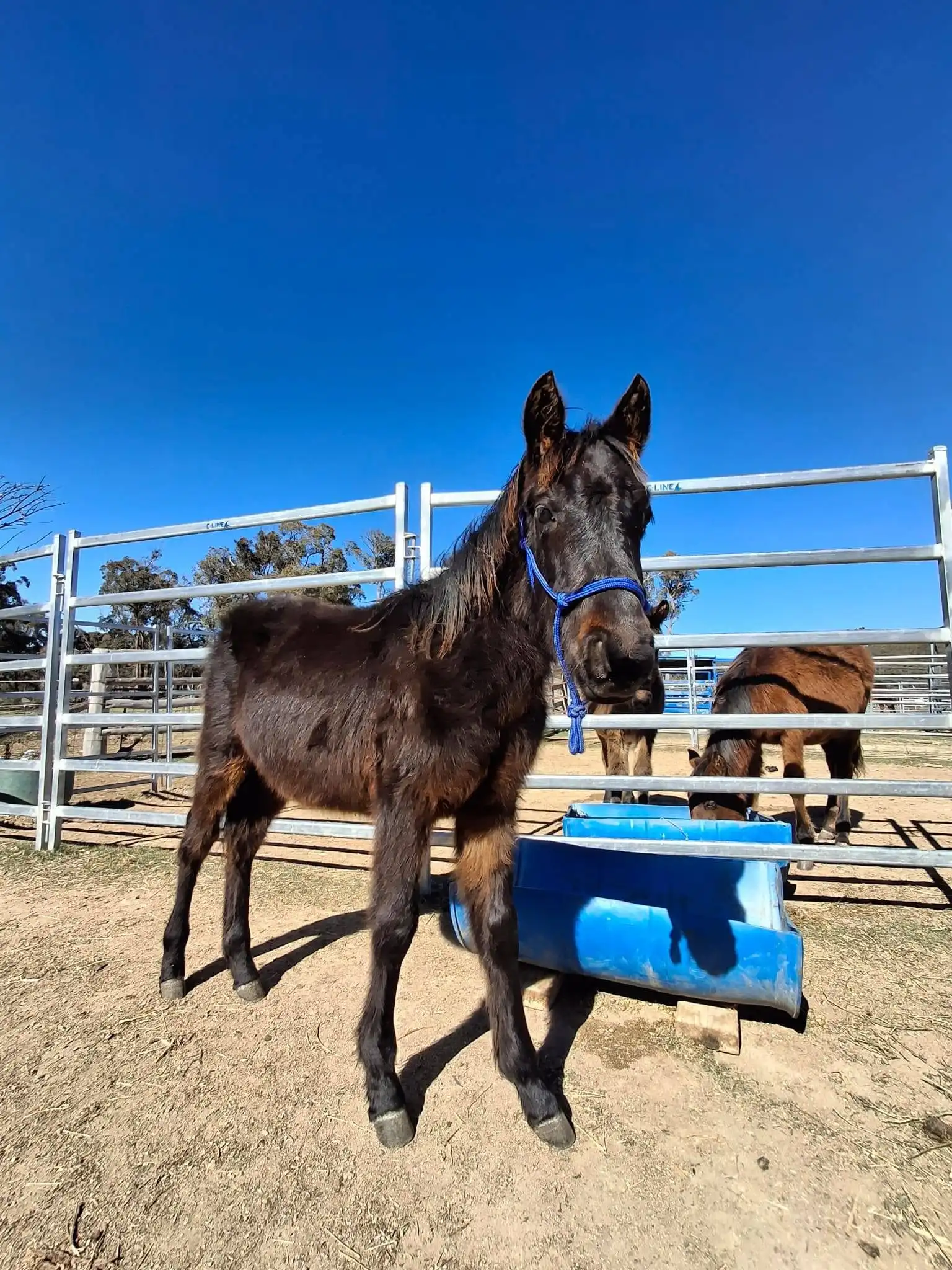
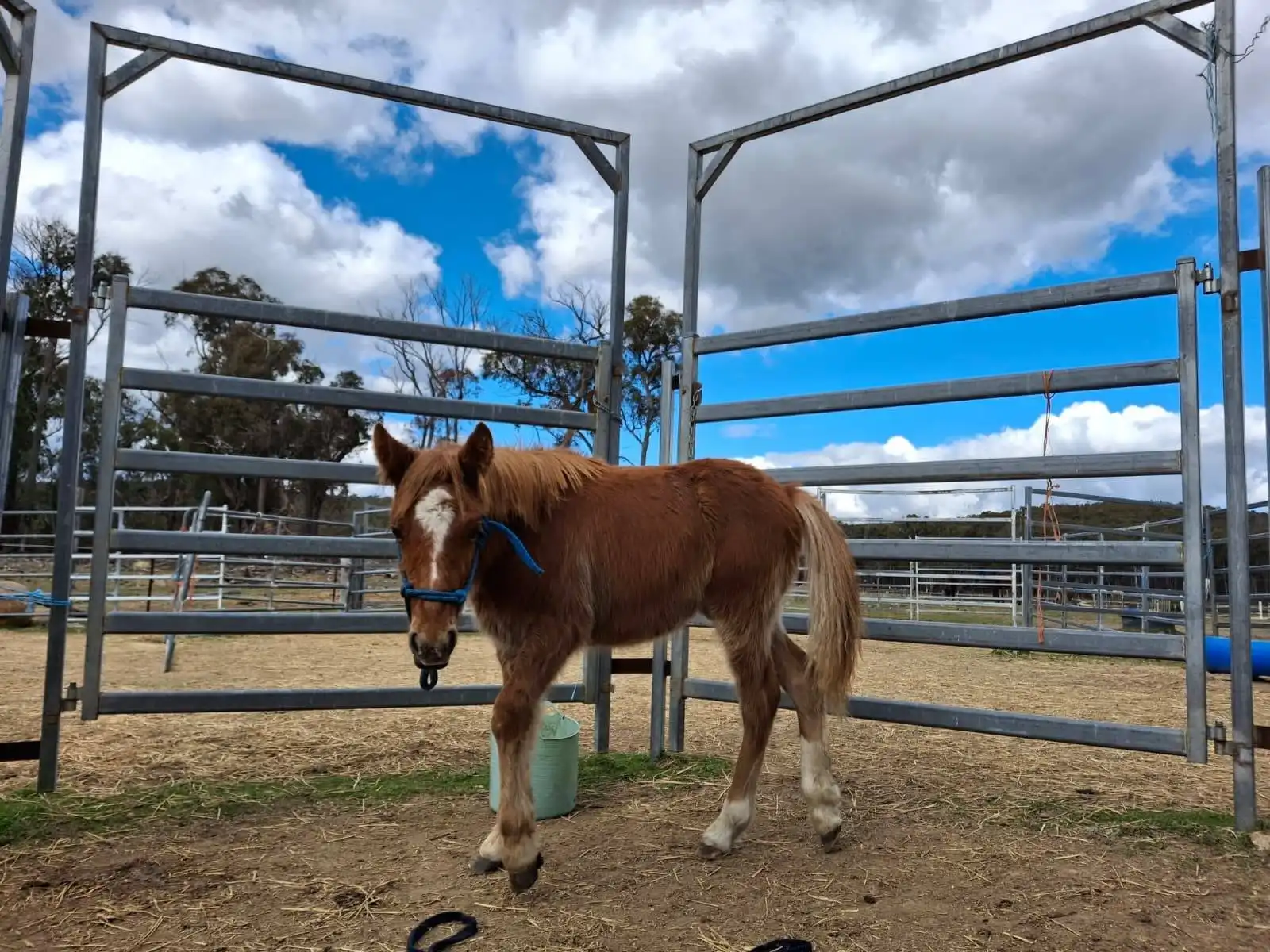
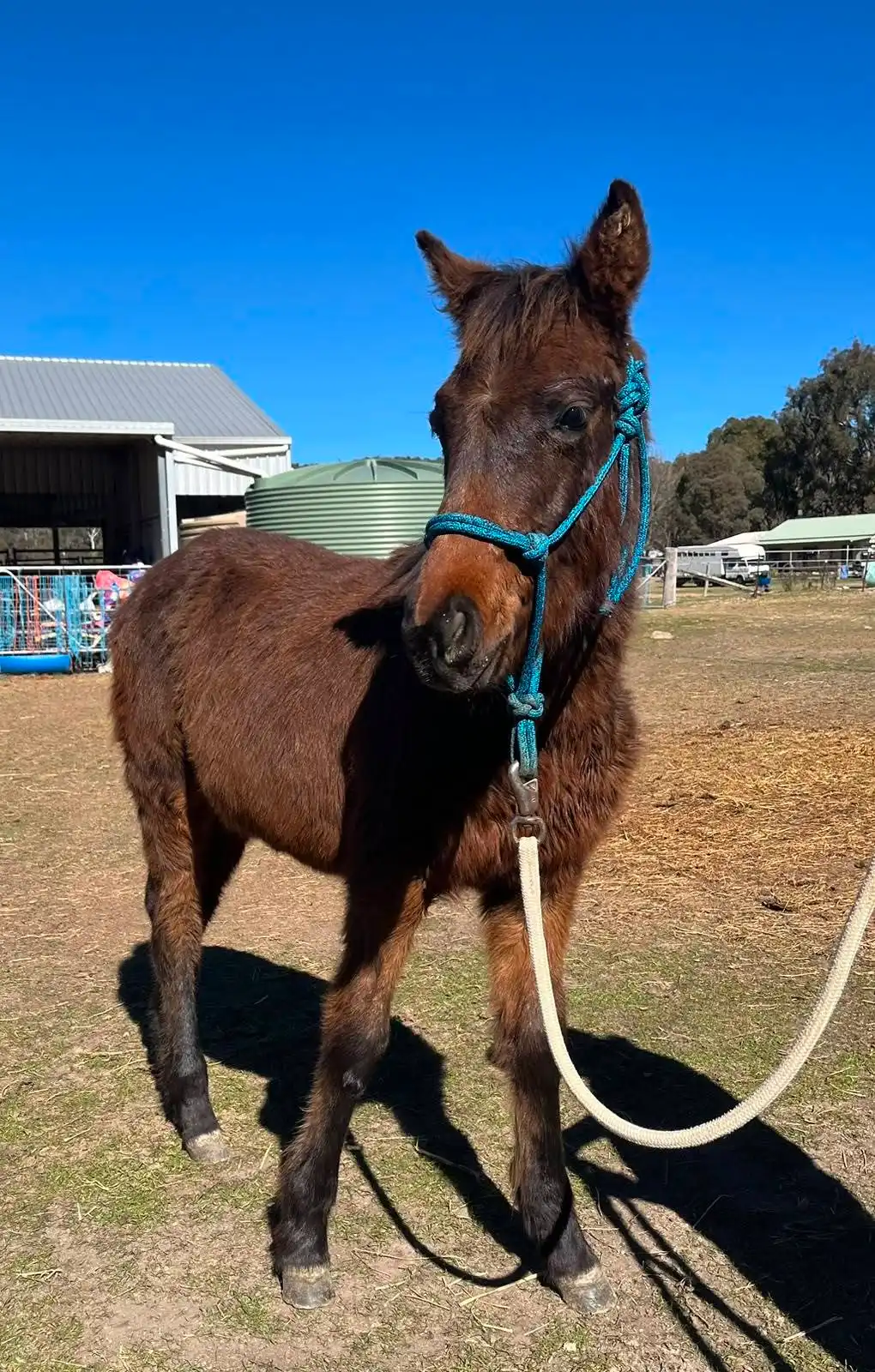
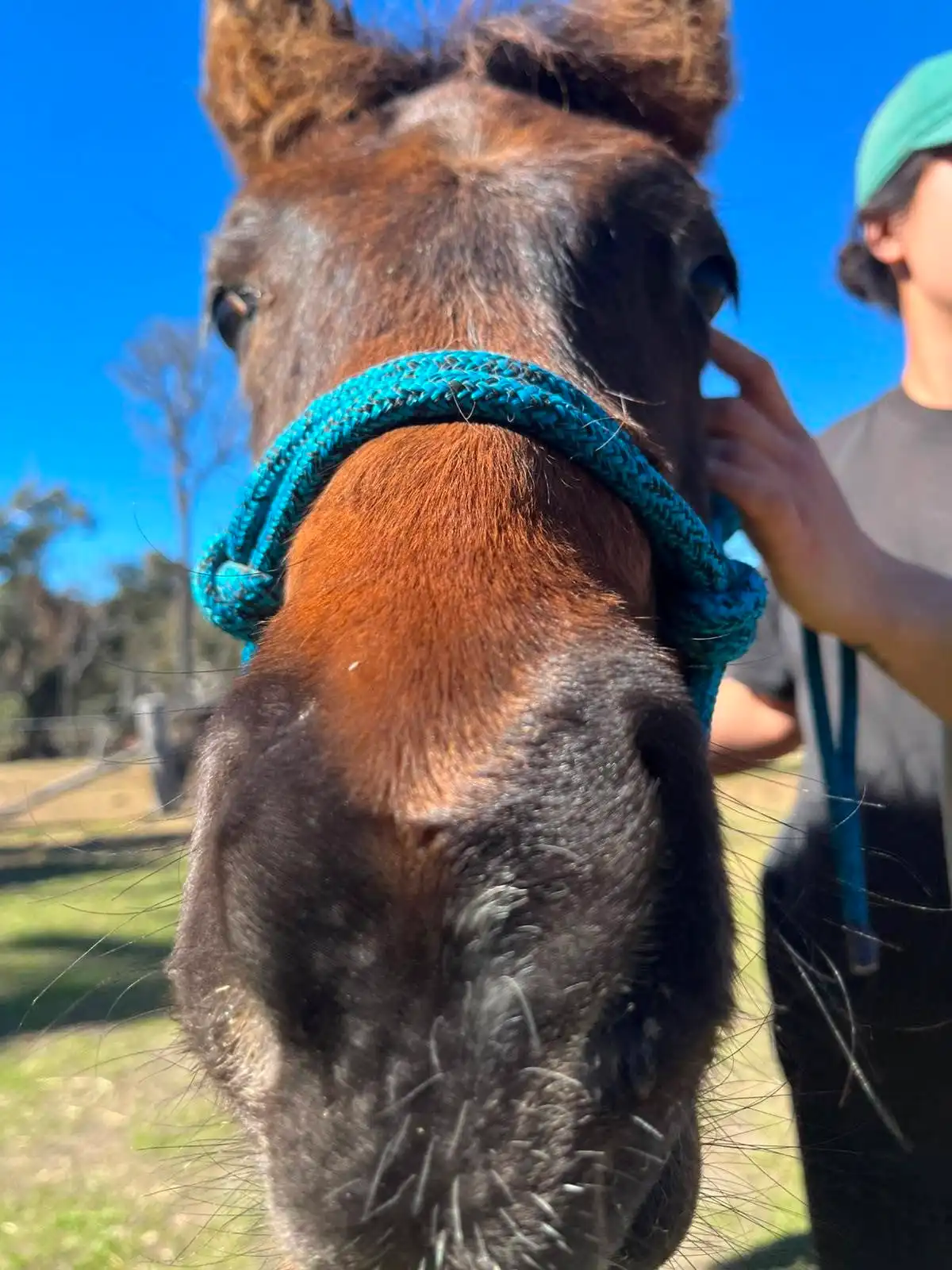
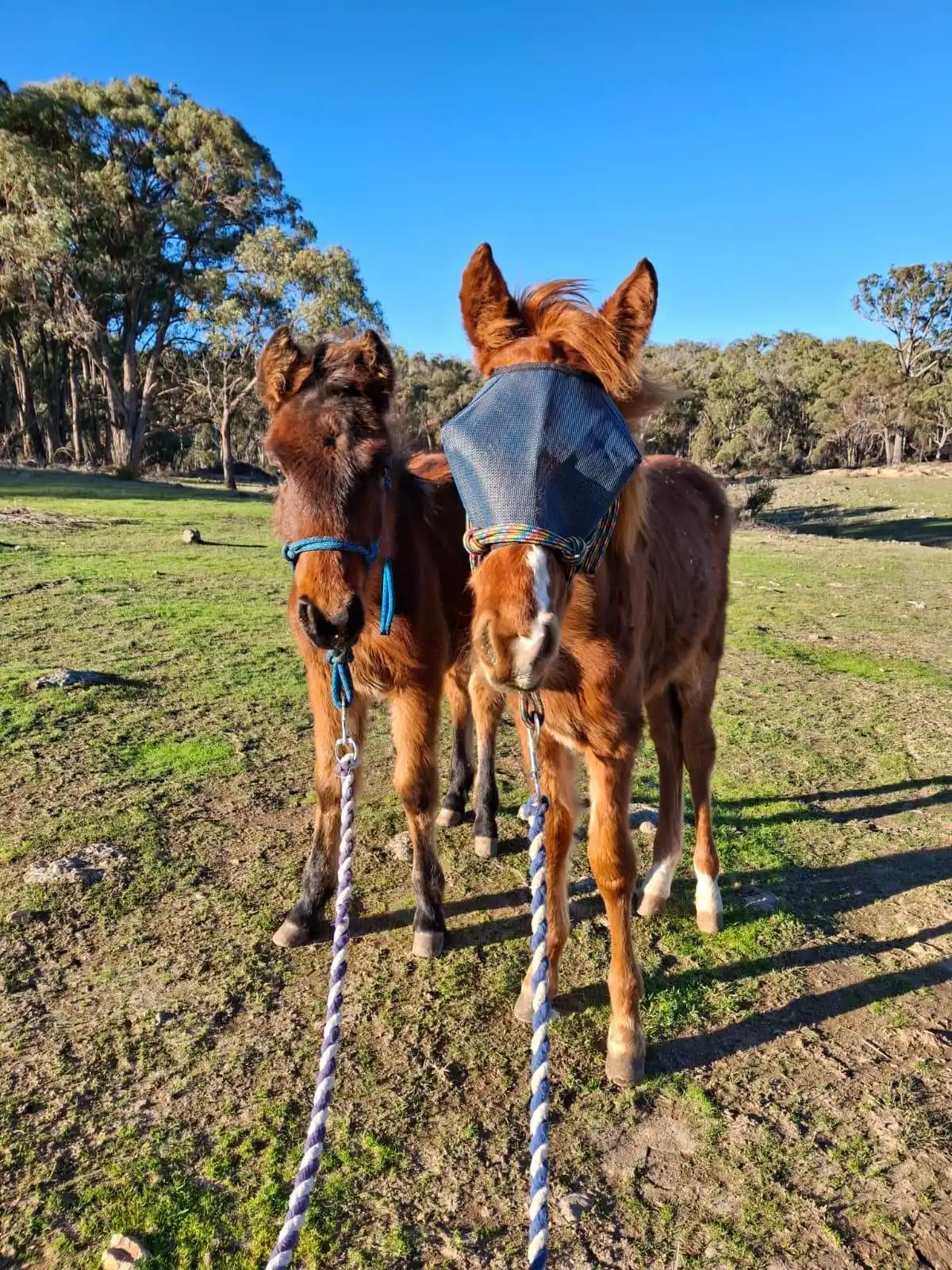
We currently have ten beautiful, fuzzy young Brumbies who will soon be looking for their own loving and suitable homes. Each of these youngsters has a unique personality, and our dedicated volunteers have been working patiently with them every day to help prepare them for the next stage of their lives.

Several of the young Brumbies have recently worn a halter for the first time and have begun learning how to lead. These may appear to be small achievements, but for a young Brumby with limited previous handling, they represent important milestones built on patience, consistency and trust.

Our volunteers understand that every Brumby progresses at their own pace. The process is never rushed. Instead, the horses are given the time and reassurance they need to become comfortable with people, basic handling and new experiences.

The early training they receive helps provide a strong foundation for their future. It also gives prospective owners a better understanding of each horse’s temperament, confidence and individual needs.

Official adoption advertisements for the ten youngsters will be published soon. These will include further information about each Brumby, their progress, personality and the type of home that may be most suitable for them.

Until then, we hope everyone enjoys these heartwarming photographs of some of our youngsters beginning their journey.

At a time when the treatment of Australia’s heritage Brumbies continues to cause enormous sadness and concern, these young horses offer a welcome reminder of what can be achieved through compassion, dedication and responsible care.

Every Brumby deserves the opportunity to feel safe, build trust and enjoy a secure future. Thanks to the commitment of our hardworking volunteers and supporters, these ten youngsters are now one step closer to finding the loving homes they deserve.

Author