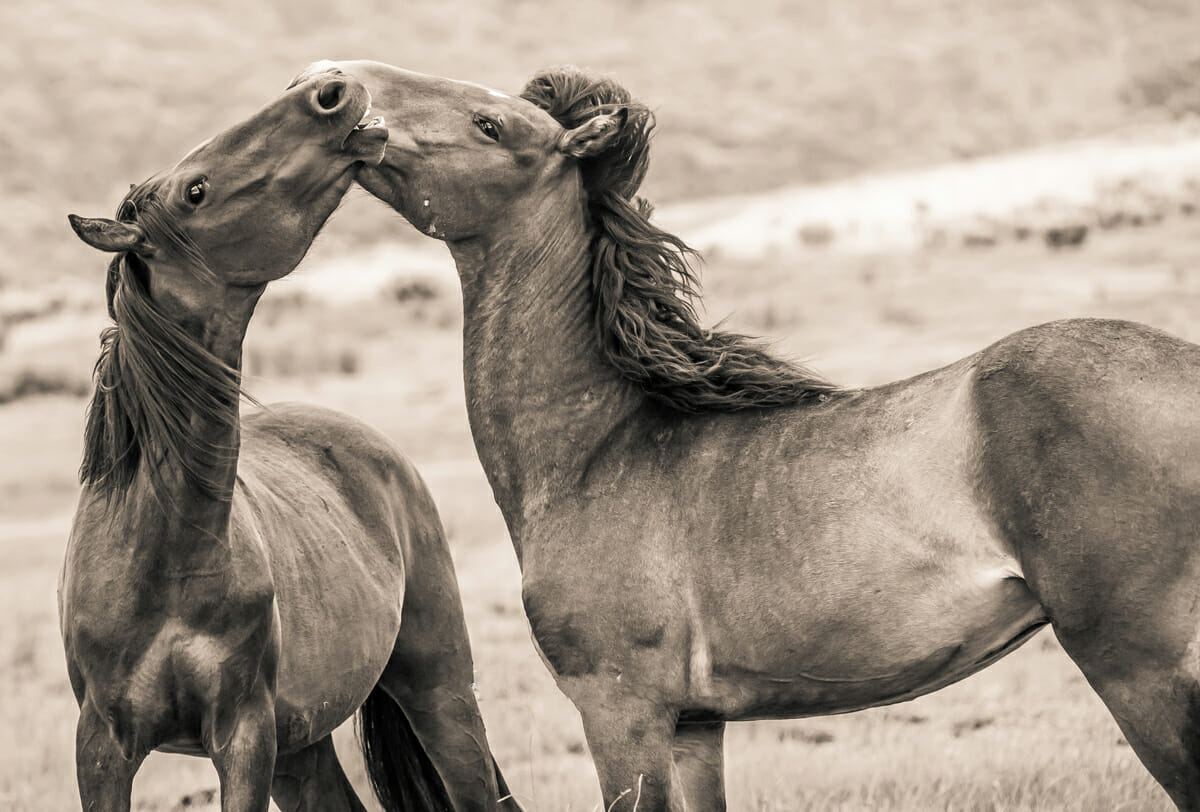
Posted

Go with the best … go with Australian born and bred

Horses regularly come through our Adoption program and are from Guy Fawkes River National Park and Oxley Wild Rivers National Park. Available horses are listed below.

Our main Sanctuary is located on the Northern Tablelands of NSW, midway between Armidale and Guyra.

Save the Brumbies Inc. CFN 17516 is a fully tax deductible animal welfare charity, no paid staff, all volunteers, you can donate with confidence knowing that all monies received go directly to the welfare of our Heritage Brumby horses. Our grateful thanks for your help.

Our Adoption program is Animal Welfare (RSPCA) approved.

Email info@savethebrumbies.org or call 02 6655 2224 for more information about the horses.

If you can’t adopt but still want to help you can sponsor a brumby.
We have more quality horses being prepared for Adoption, not yet advertised, keep in touch with this page.

STB Inc. has taken 29 horses from Kosciuszko National Park and 12 horses from Corindi NSW, result of the severe flooding in the area, the alternative was slaughter. Some top quality horses among them, please see New England Brumby Sanctuary on Facebook for details.

Author

Posted

The Hon. Lilly D’Ambrosio has approved Parks Victoria’s (PVs) Strategic Action Plan Protection of Floodplain Marshes Barmah National Park and Barmah Forest Ramsar Site 2020 – 2023 (the plan).

The Australian Brumby Alliance (ABA) strongly rejects PV’s claim that removing Barmah’s Brumbies is an immediate priority as “Brumbies are the most destructive of Barmah’s feral species”. The ABA’s goal is to support the retention of sustainable Brumby numbers in their historic homelands. We are deeply shocked and horrified to see this Barmah Brumby eviction plan based on propaganda.

Jill Pickering, ABA’s President said that PV advised that the numbers of Barmah’s deer, pigs and goats etc. were in the ‘thousands’. PV reports removing 20 pigs, 34 deer, 7 sheep and 1 goat (multi-birth species) in 2017-18, so “removing all horses (single birth species) is disproportionately excessive.”

The PV plan then states “pig, deer, goat and sheep numbers in Barmah Forest are not available, as they are smaller and more cryptic … not as easily discriminated ….. the cryptic (hidden) nature of pigs and deer also makes their eradication difficult”. This admission infers that any damage where horses are and no other ‘cryptic’ species is visible, will be recorded as Brumby damage. “This is not science, it is propaganda and totally unacceptable for a government agency,” said Ms Pickering.

Moira grass declined with River regulation (1930’s), yet horses, cattle, sheep and logging was routine in Barmah for 100 years before the 1930s. The plan quotes Colloff 2014; but omits Colloff 2014’s key water regime quote “a flood regime that most closely matches plant-specific water requirements … represents the single management action that holds the best prospect for conservation”.

The plan states that despite environmental water deliveries the decline has not reversed due to “the inability to achieve the most appropriate water regime due to delivery constraints”. Ms Pickering states, “PV is simply using Brumbies as a scapegoat, since correct water regimes are un-achievable.”

PV also inaccurately claims that the National Parks Act (Vic) 1975 “does not allow for the ongoing presence of horses within the park … they are considered exotic if uncontrolled”. This is false – the Act gives PV a choice to, “eradicate or control”.

We must not allow this plan to overrule Australian community groups that value Brumby heritage. “Co-existence of cultural values should always be recognised, respected and encouraged,” said Ms Pickering. “This is especially important in cases where they conflict (Burra Charter 2013).”

For further updates please refer to www.australianbrumbyalliance.org.au

Author

Posted

There was movement at the station, for the word had passed around That the colt from Old Regret had got away, And had joined the wild bush horses – he was worth a thousand pound, So all the cracks had gathered to the fray.

Like so many of us, I learned this poem in primary school and can write these lines from memory. Brumbies, these ‘wild bush horses’, are a much-loved part of Australian history. The Brumby has carried us into the annals of legend, from The Man from Snowy River through World War I, to now.

No, wait – not anymore. Now, Brumbies are deemed a feral pest in many parts of Australia and it is legal to hunt and shoot them, from helicopters, like vermin. A shocking way to thank these beautiful, loyal creatures that have done so much to help us.

STB Tallagandra Rose, known as Rosie to her adopted family, is one such who might have been slaughtered had she not been rescued by Jan Carter from Save the Brumbies (STB) at the New England Brumby Sanctuary, Armidale. Rosie’s mother died when Rosie was just a few weeks old. The abandoned foal was found by a horse trapping contractor at the Guy Fawkes National Park, who took pity on Rosie and called Jan. Jan dropped everything to make the 10-hour round trip, bringing Rosie to their high-level care sanctuary at Bellingen. “Rosie was very weak, but she was still standing, and the Brumby is a hardy animal. Even then her sweet nature shone through – we called her Rosie because she was so beautiful,” says Jan.


Jan Carter with one of her Brumbies. Image by Elize Strydom

Rosie thrived under the loving care of Jan and her volunteers. She soon became a favourite with visitors and was eventually adopted by Elizabeth and Tom Testone, in the Southern Highlands of NSW.

I ask Elizabeth why she chose Rosie. “Tom had been following the plight of the Brumbies and was devastated after hearing about the Brumby cull of 2000, right after Australia showcased the importance of these horses in the Opening and Closing Ceremonies of the 2000 Sydney Olympics. In 2006, I came across the STB website and decided to surprise Tom for his birthday by sponsoring a Brumby. By sponsoring a foal, we figured we had a few years to prepare before we officially brought her home. In October 2007 we went to meet Rosie in person and that is when our love and devotion for Brumbies officially began.”

The Testone’s love affair grew to include Ruben, hand-picked by Jan as a suitable ‘bestie’ for Rosie: it’s a policy of STB to re-home Brumbies in pairs or small mobs. Ruben and Rosie are inseparable now and Elizabeth says that although they have different personalities, both are intelligent, hardy, loyal animals who repay love and respect tenfold. Elizabeth cannot imagine life without them.

In support of protecting Brumbies, Elizabeth says, “Our Brumby heritage is very important to our colonial history. What strikes an even deeper chord is that Guy Fawkes National Park, where Rosie and Ruben came from, was originally a remount station for the Australian Cavalry, before it was abandoned along with its horses at the start of WW2. The ancestors of today’s Guy Fawkes Brumbies carried our Light Horseman to victory in WW1. Sadly, they never got to come home. Brumbies are a living link to these four-legged Diggers that never returned, and we believe they should be cherished and honoured out of respect: they were as much a part of our history as the brave men who rode them.”


Beautiful Brumbies. Image courtesy of Kris Daley Photography

Horses from the Northern Tablelands of NSW were bred for the remount trade and known as Walers; the Brumbies today can be traced back to those early bloodlines, including the great Arabian stallion, Saladin. It was the Australian Light Horsemen who were first to cross the desert and enter Damascus in WW1, ahead of Lawrence of Arabia.

Save the Brumbies is a registered charity petitioning for the Brumby, working towards the abolition of aerial or ground shooting of Brumbies, Australia wide. STB wants humane management plans introduced, that comply to RSPCA guidelines, supporting the continuation of healthy Brumby herds as a part of our national heritage. Indeed, the United Nations argues that all countries of the world must conserve wild horses to breed back the strength and endurance we have lost in domestic horses through inbreeding. Jan and her crew are all volunteers. The refuge runs on donations and sponsorships, which can be easily organised online as small monthly payments. In drought, feed is expensive, so any donations are gratefully received.

Australians celebrate ANZAC Day as important to our national identity. But what of the beautiful horses who stood beside those ANZACs? Can we let their descendants be shot down like vermin?

Let’s give Banjo Patterson the final word on the future of the Australian Brumby:

But his pluck was still undaunted, and his courage fiery hot,
For never yet was mountain horse a cur.

CREDIT: Original article by Zacharey Jane

Author

Posted

At a remote location hidden near Guyra, the New England Brumby Sanctuary was the venue for an Open Day. Original Photos and story by Brett Dolsen.
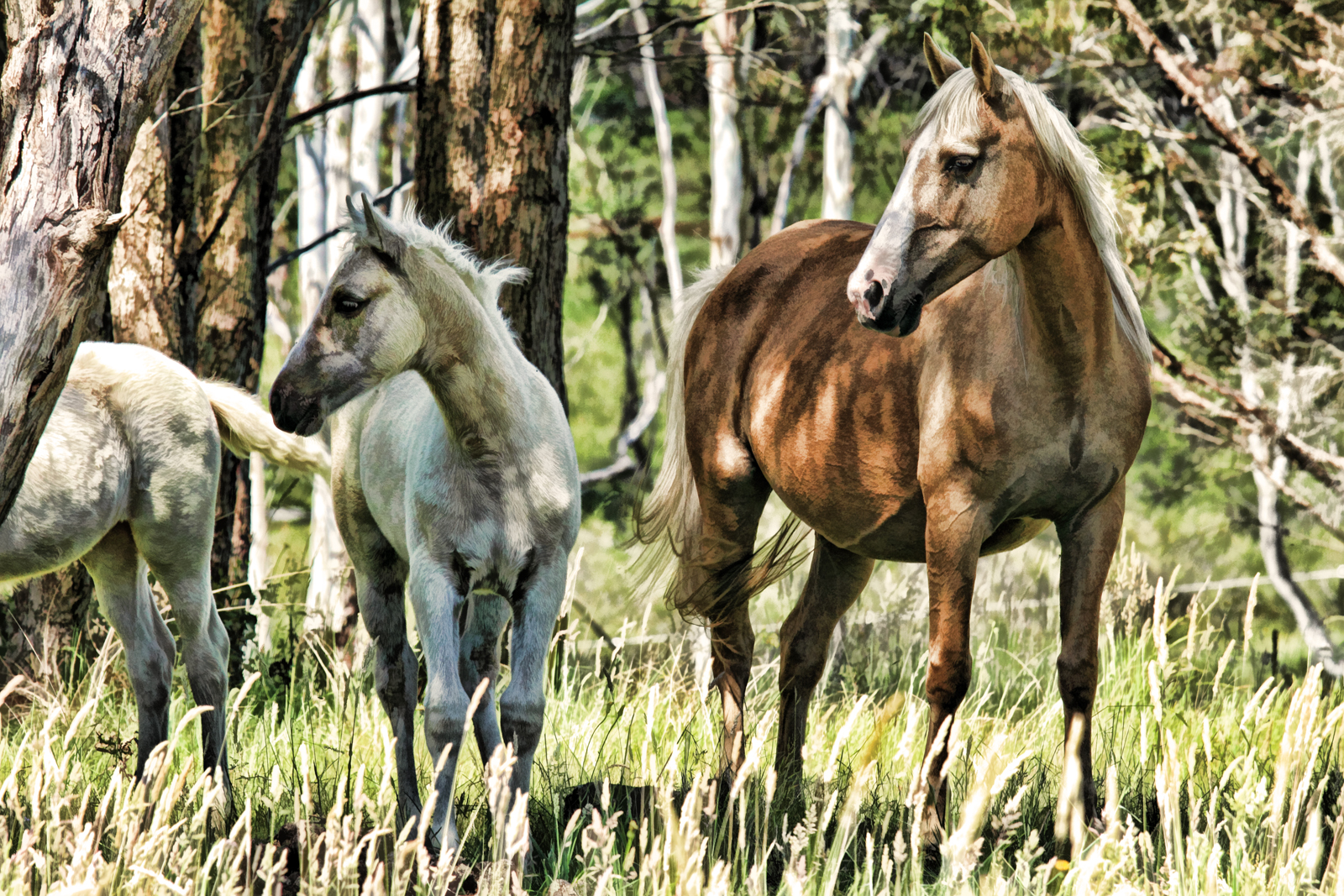

Brumbies at the New England Sanctuary near Guyra NSW.

The sanctuary was established in 0ctober 2008 to care for Brumbies removed from Guy Fawkes River National Park and to conduct a breeding and adoption program to preserve blood lines of horses under the management of STB, or Save the Brumbies. A second sanctuary managed by STB is near Bellingen and cares for horses not suited to adoption.

On arrival, visitors were greeted by Jan Carter, founder and Chief Executive Officer of Save the Brumbies Inc. tax deductible charity (STB) and a small team of volunteers dedicated to the saving and protection of wild Australian horses known as Brumbies. The word Brumby may have originated from James Brumby, who in the early 1800s released horses into the wild; however, the Aboriginal word ‘baroomby’ also means wild horse.

Jan, a professional musician, who plays both classical guitar and harp, was outraged when confronted with the news in the year 2000 that aerial shooting had slaughtered 600 wild horses in the Guy Fawkes River National Park near Armidale. Some horses were wounded, only to die some time later from their wounds. Jan had previously ridden trails in the area and seen the wild horses in their natural environment. As a result, Save the Brumbies Inc. was established and following negotiations, a Steering Committee was set up leading to horses being removed from the parks and placed in the care of interested horse groups. It should be noted that wild horses are still regarded as feral animals in Australia – unlike the USA, where Mustangs are protected and heritage valued.
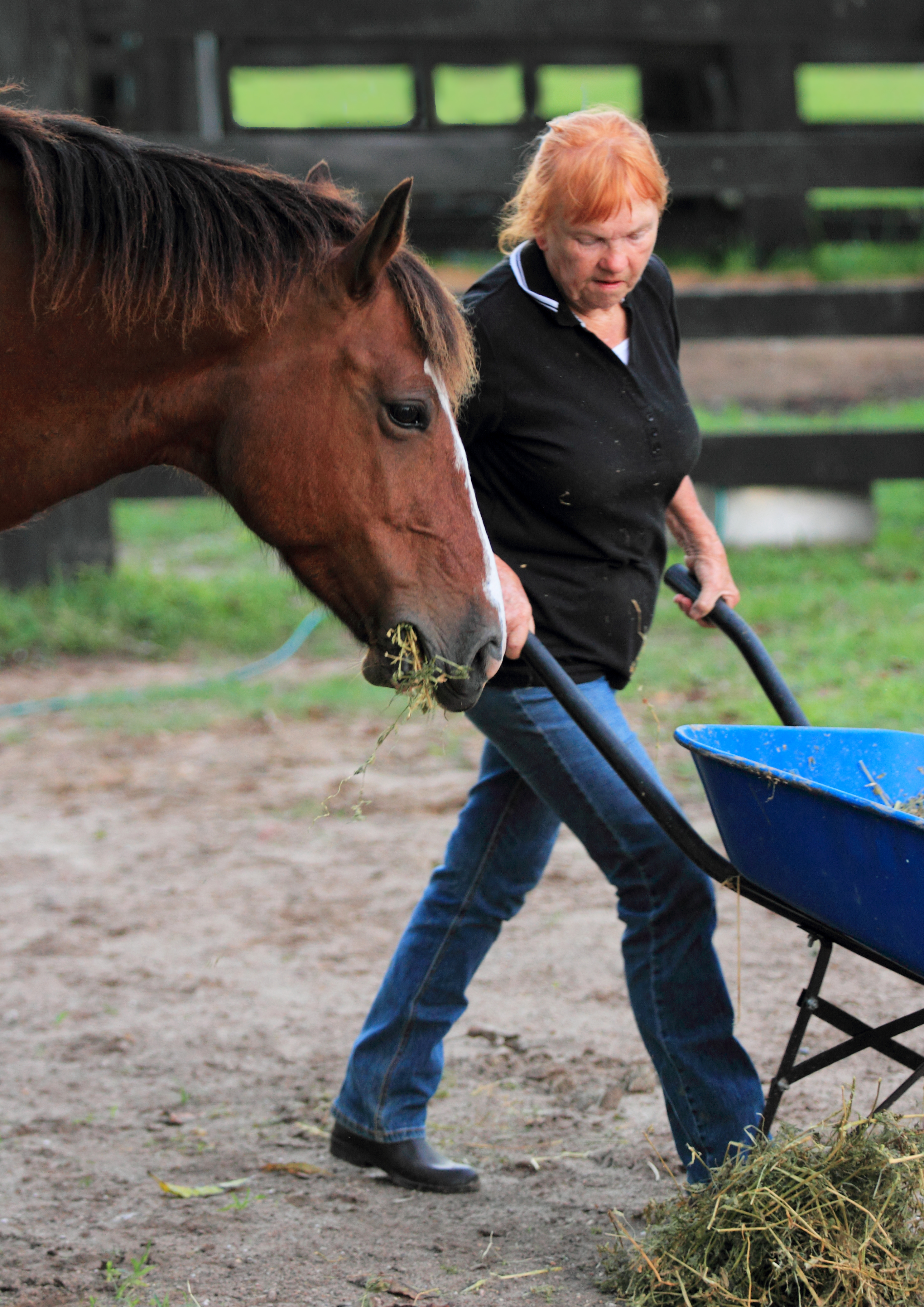

After a long day at Guyra Jan feeding the horses at the Bellingen Sanctuary

Jan has personally produced a music CD titled Run with the Wind, with moving arrangements of classical guitar and harp dedicated to the Australian Brumby. Proceeds from sales of the CD are just one of the fundraising methods used for the charity. She will not own a mobile phone, as her precious time is taken up with caring for the horses and maintaining the property; however, each day includes responding to enquiries by email, as well as keeping sponsors updated on their horses.

The Bellingen Sanctuary homes on average around 15 horses cared for by Jan. These horses are in need of high care due to being orphaned, injured, down in condition or aged. The care for these horses is provided by sponsorships, where sponsors can visit and be kept updated on the progress of their chosen animal. It is a highly rewarding and personal way to help the wild horses. During the recent floods at Bellingen over $20,000 of damage occurred to the Bellingen property, but it failed to meet criteria for flood relief.

Jan and STB have also been involved with organisations and governments in other states, including Queensland, where aerial slaughter is still permitted.

Horses are still being shot, or trapped in National Parks and consigned to abattoirs for slaughter. Driving into the New England sanctuary to the right were four mares with their young foals on a large field of healthy grasses, benefiting from good rain falls throughout 2011. To the left were two Apsley Gorge Brumbies (Tictoc and Safina), transported to the Open Day by the Oxley Heritage Horse Association. A little further along could be seen Brigitte Bardot, a Palomino sponsored by the actress of the same name. Parking in the undefined space near the homestead, one could see four young yearlings in another field – three ready for adoption and one still undergoing training.
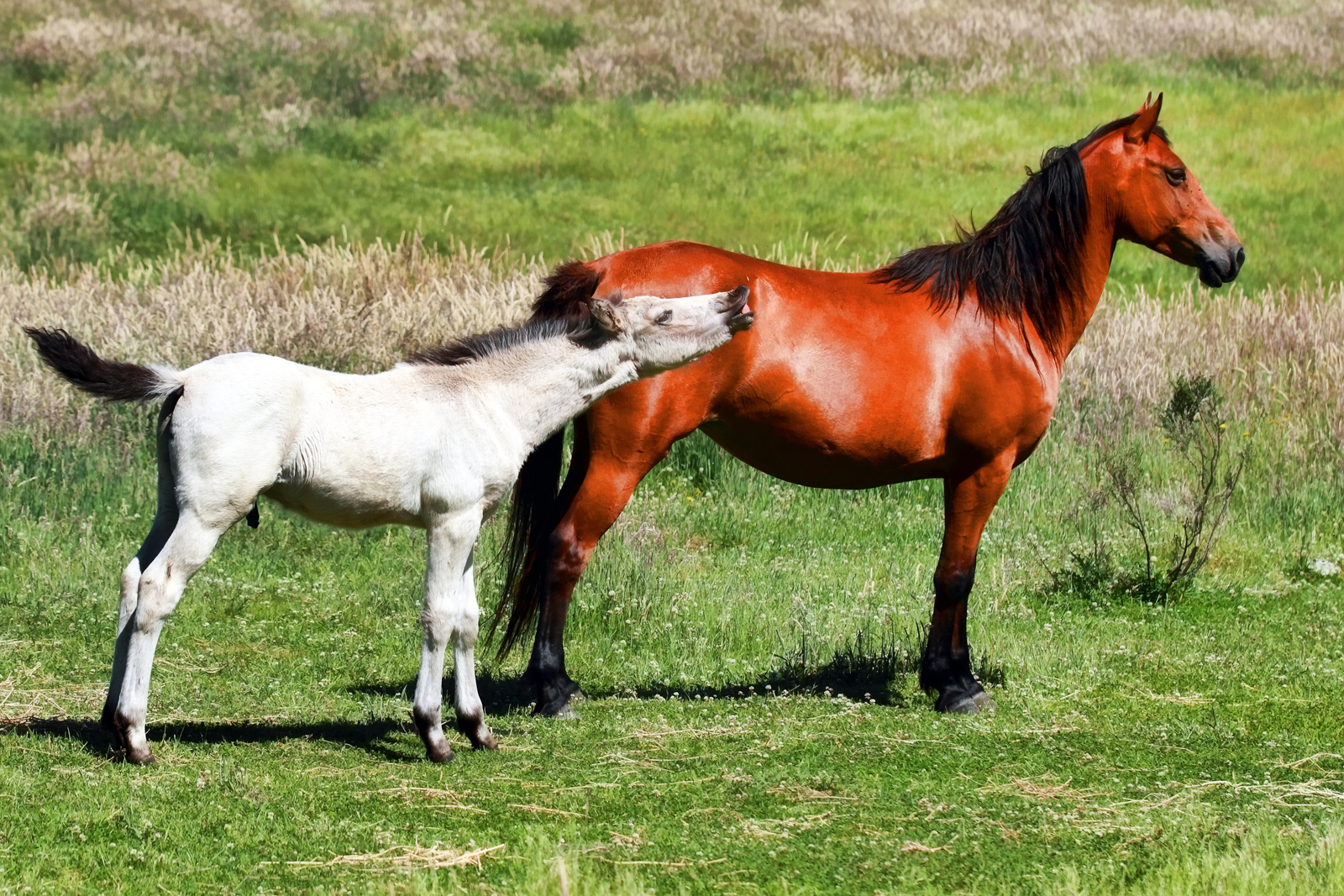

STB Mrs Brown with STB Master James Brown

The horses at the sanctuary are Guy Fawkes Brumbies, whose bloodlines can be traced back to a stallion named Saladin from the early 1900s. These same bloodline horses were used by the Australian infantry in both world wars and made famous by the Lighthorsemen. In another larger area of some 200 acres were three stallions not seen on the day due to the rugged country. The sanctuary was chosen due to terrain that best replicated the environment the horses came from when captured. The generosity of several people led to the availability of the 1,375 acre Guyra property, and all funding comes from private sources and fundraising by STB.

So far there have been over 200 horses adopted from the STB program and many others sponsored. There are many people on the waiting list for horses; however, due to the higher than usual rainfalls of 2011, few horses are currently being removed from the Guy Fawkes National Park, where it is estimated that around 500 horses roam. Of concern is that with strong growth within the park, breeding may be higher than usual. It is National Parks policy that all horses will be removed within 5 years – a concern to STB, as government policy may revert to earlier unacceptable management and controls.

Jan Carter and the STB would like to see two full-time experienced horsemen employed by National Parks rather than the Park Rangers, already fully occupied with other duties, being used. This, she feels, will be the best management, ensuring the government achieves its goals and that all horses are saved and humanely relocated to appropriate groups.

The NSW Deputy Premier Andrew Stoner is Patron of the New England Brumby Sanctuary.

During the Open Day, visitors were given a display on the handling and training of young horses who are part of the breeding and adoption program held at the sanctuary. In a heartwarming display, Megan Hyde, working with the young colts and fillies, showed her skills in preparing the young horses. The colt STB Basil was touched for the very first time by human hands.
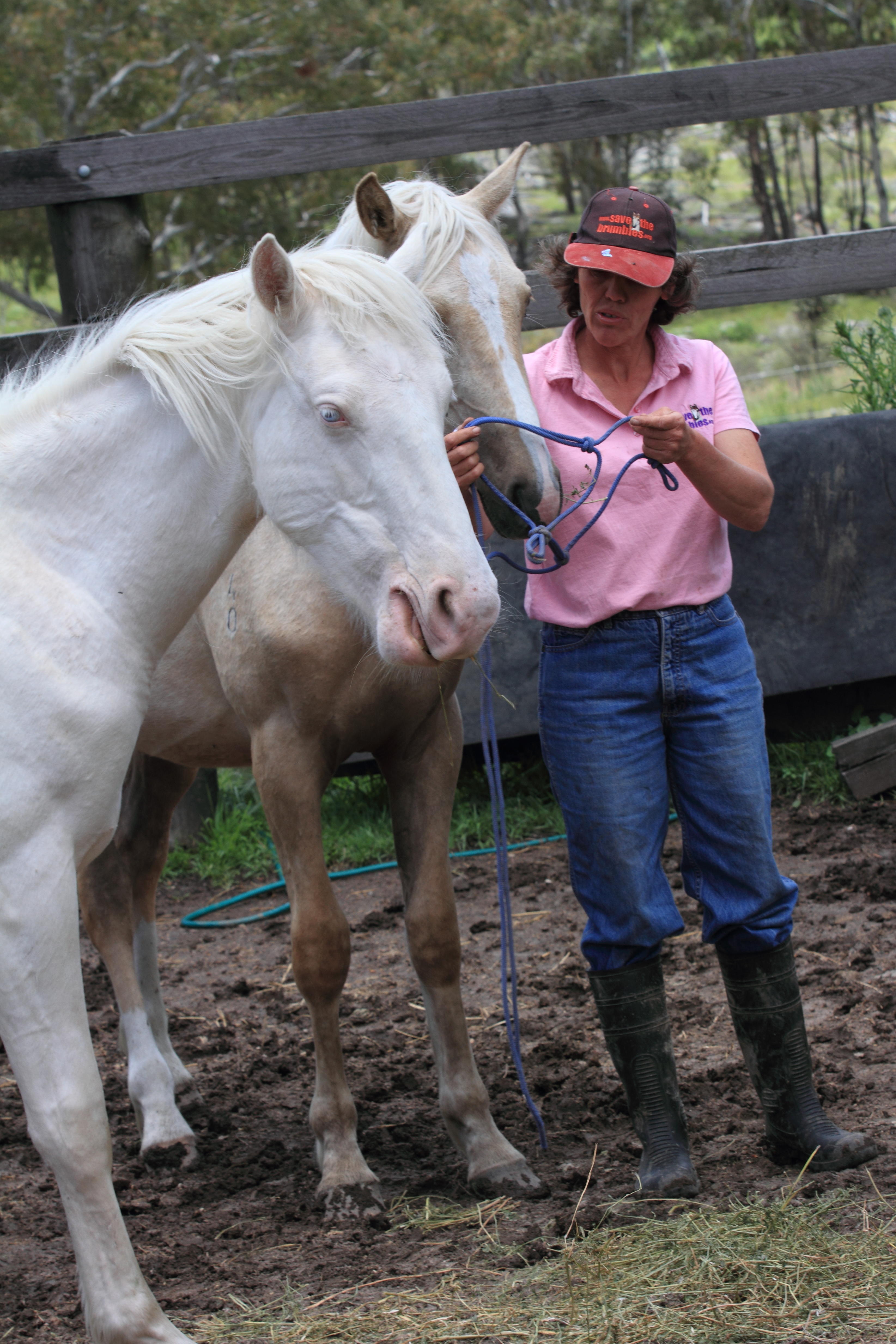

Megan Hyde, Secretary and Welfare Officer of STB with STB Cloud and STB Lachlan.

As new horses arrive in the sanctuary, both Megan and Jan are excited to name the new residents based on themes that have included music, historical figures and characters.

The small and very select breeding program ensures the conservation of the blood lines of the Guy Hawkes Brumbies. As a result, the Australian Brumby Horse Register has been established and horses are now seen at selected shows. It costs around $1,200 for a horse to be prepared for adoption, and each horse is carefully matched to his new owners. The horses are always in good condition, disease free, and Brumby owners will swear by their loyalty, trust and trainability.

Maybe one day we will even see these Heritage Horses play their role in Anzac Day Marches, working with children and people with disabilities and as an attraction for local and overseas tourists.

The future for the Guy Hawkes Brumbies is unclear and with organisations such as Save the Brumbies Inc. the founders are also getting on in years. As a charity and volunteer based program, not only is financial support needed, but also suitably dedicated individuals to carry on this work into the future and to preserve this wonderful Australian icon. Of course, this may all become a lot easier if both Federal and State Governments recognise the Brumby as an integral and important icon in Australian History and provide funding and protection to our beautiful wild horses.
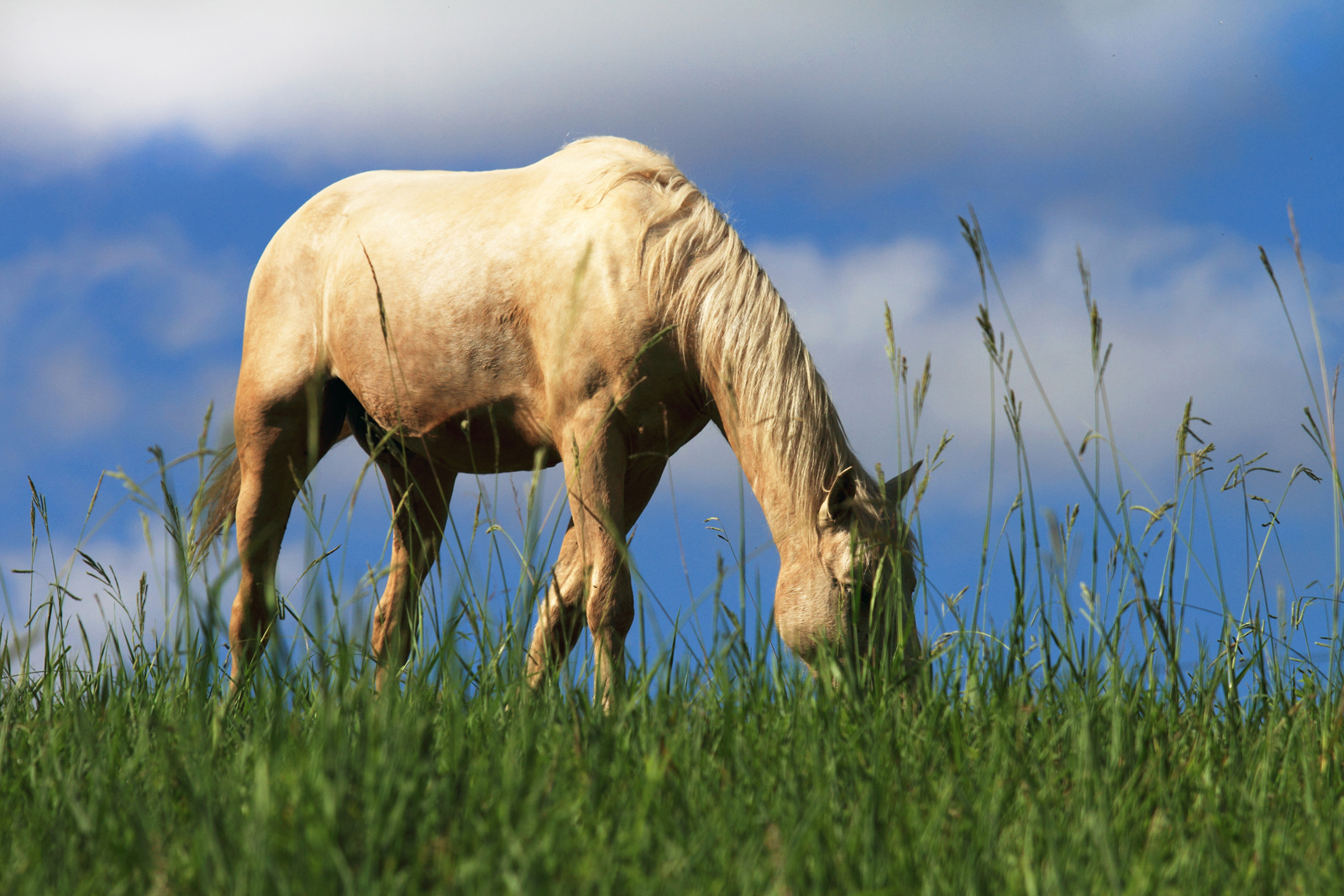

Under special care, a Brumby from the Bellingen Sanctuary.

CREDIT: Original Photos and story by Brett Dolsen.
Author